How metallic floors get their look
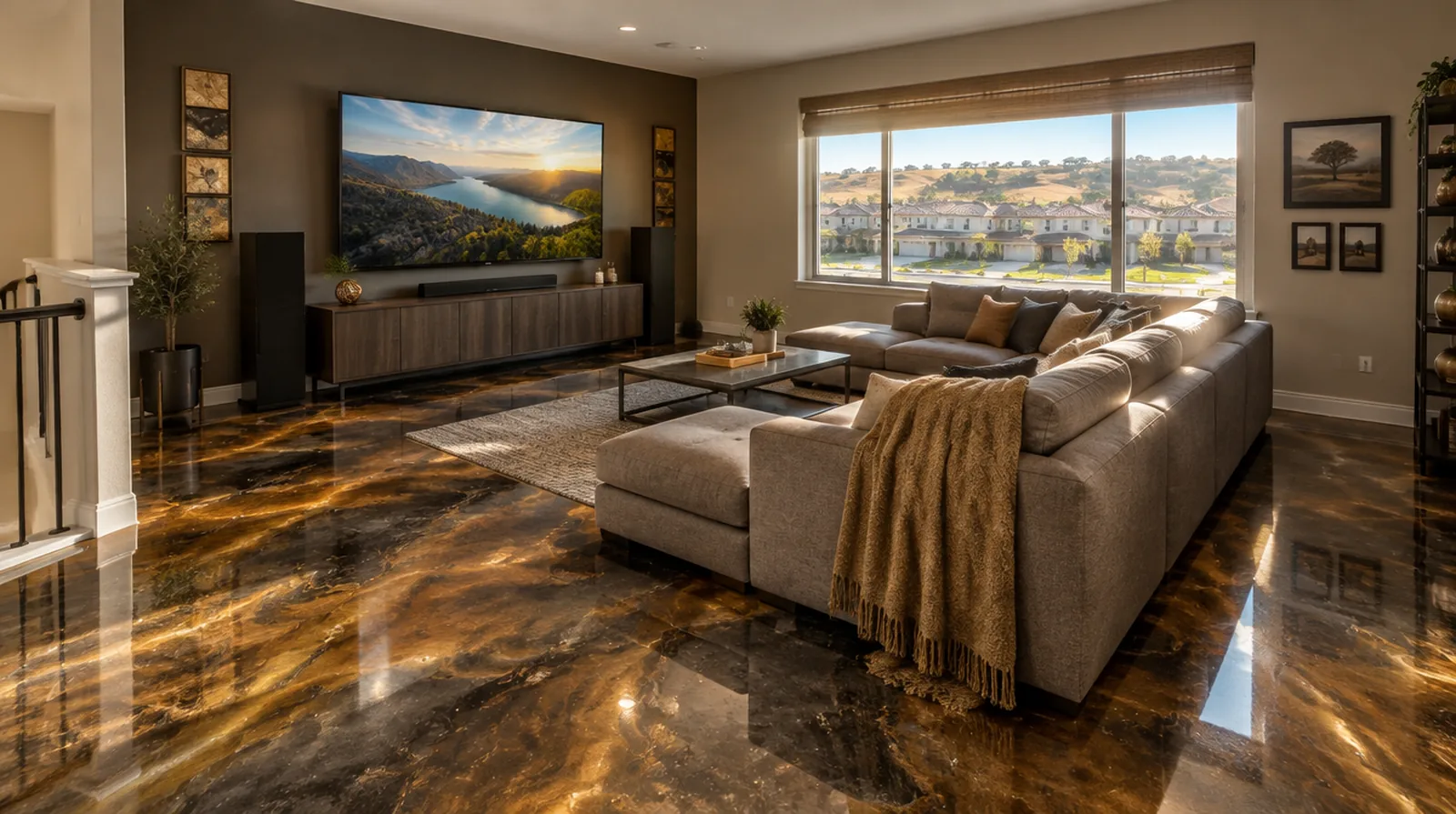
Metallic epoxy contains finely ground pearlescent pigments. When the resin is poured, those pigments float and move. Using rollers, brushes, trowels, solvent sprays and even leaf blowers, the installer pushes them into rivers, swirls, clouds and veins. As the resin levels and cures, the pigments settle at slightly different angles, so the floor shimmers and shifts as you walk across it. It is part flooring and part art project.
Spaces that suit it
In local homes, metallic floors often go into converted garages and bays used as game rooms, golf simulator rooms, home theaters and gyms. They also suit downstairs offices and accessory dwelling units. Commercially, we pour them in salons, boutiques, car detailing studios, tattoo shops, dental offices and restaurant bars. Anywhere you want people to notice the floor, metallic works.
Planning the design
Because every metallic floor is unique, we spend time up front agreeing on the look. We share photos of past floors, make sample boards in your colors and talk about movement: subtle and calm, bold and swirling, or veined like marble. Popular palettes include silver with charcoal, copper with bronze, champagne with white and deep ocean blues.
Installation
Flat, clean concrete
Metallic resin highlights every dip and ridge beneath it. We grind carefully, fill cracks and low spots and, where needed, apply a skim coat so the base is flat.
Primer and ground coat
A primer seals the slab to prevent air bubbles rising through the pour. A colored ground coat sets the background tone.
The pour
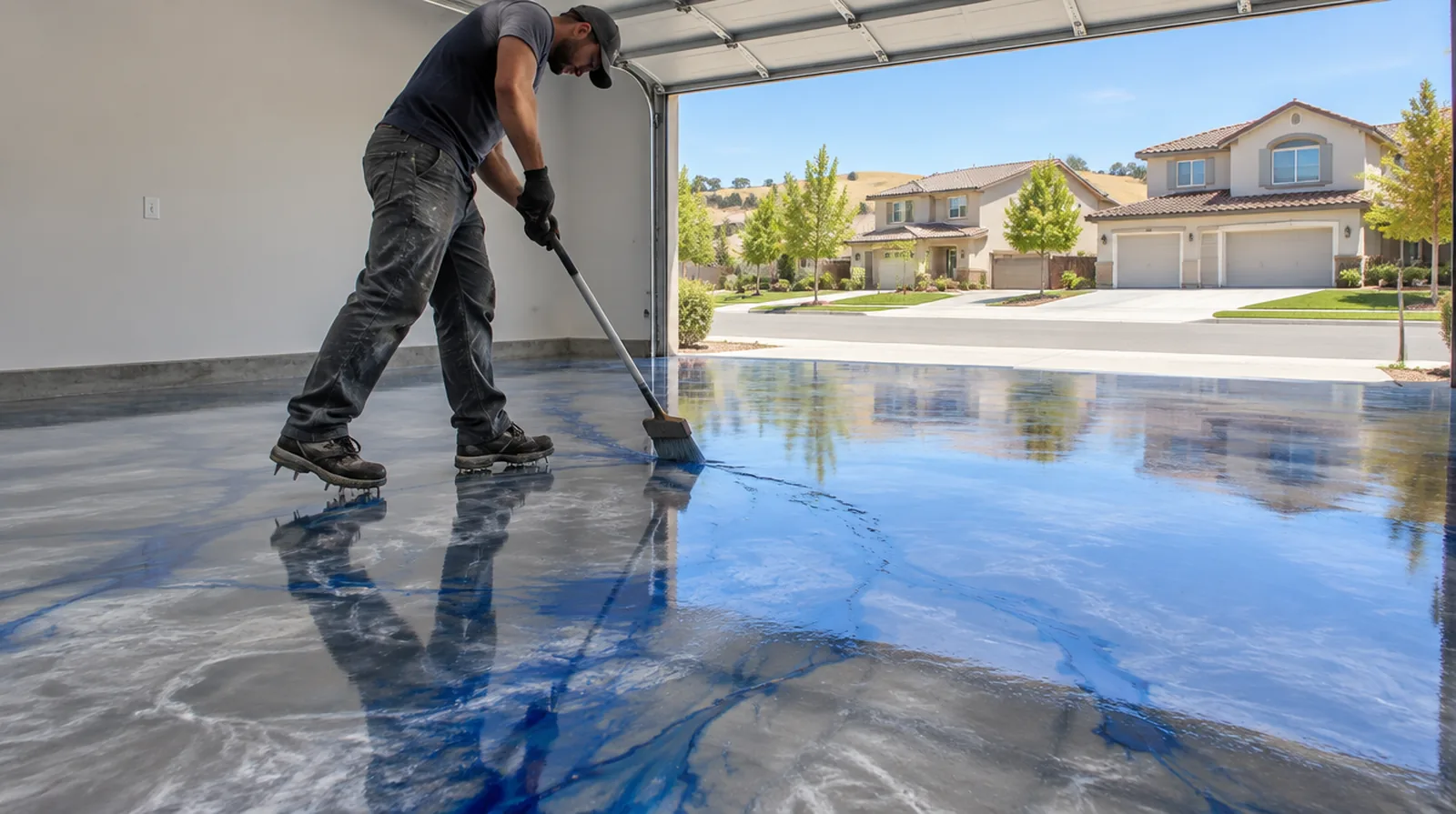
The metallic layer is mixed in batches and poured in ribbons, then manipulated while still workable. Timing is critical, especially when temperatures climb.
Clear protection
A clear urethane or polyaspartic topcoat guards against scratches and UV. We offer gloss or satin finishes, and fine grit can be added.
Temperature management
Warm temperatures shorten the time resin stays workable. In summer, we start metallic pours at dawn, pre-cool materials and, in conditioned spaces, run the AC the day before. Controlling temperature gives the pigments time to move and settle naturally.
Realistic expectations
Metallic floors are durable but show scratches more readily than flake floors, especially in dark colors. In a parking garage, they are best paired with a tough topcoat and reasonable care. In living spaces, felt pads under furniture and regular dust mopping keep them looking great.
Care
Dust mop to remove grit. Damp mop with a neutral cleaner. Avoid dragging heavy equipment. In commercial spaces, consider periodic topcoat refreshes to maintain uniform gloss.
Questions
Can you replicate a floor I saw online?
We can get close in color and style. The exact pattern will always be unique.
How long does it take?
Typically two to three days from prep to final coat.
Is it slippery?
Gloss finishes can be slick when wet, so we add fine grit in areas that may get wet.
Start your design
Contact us to plan colors and see sample boards.
Planning furniture and lighting
Metallic floors react strongly to light, so it helps to think about fixtures before the pour. Warm LED bulbs bring out copper and bronze tones, while cool white lights make silver and blue blends sparkle. Large windows will highlight movement in the pattern across the day. We also plan the flow of the pour around where cabinets, a bar or a pool table will sit, so the most dramatic swirls show in open areas rather than hiding beneath furniture.
Design a metallic floor
Call (916) 496-3814 for a free estimate.