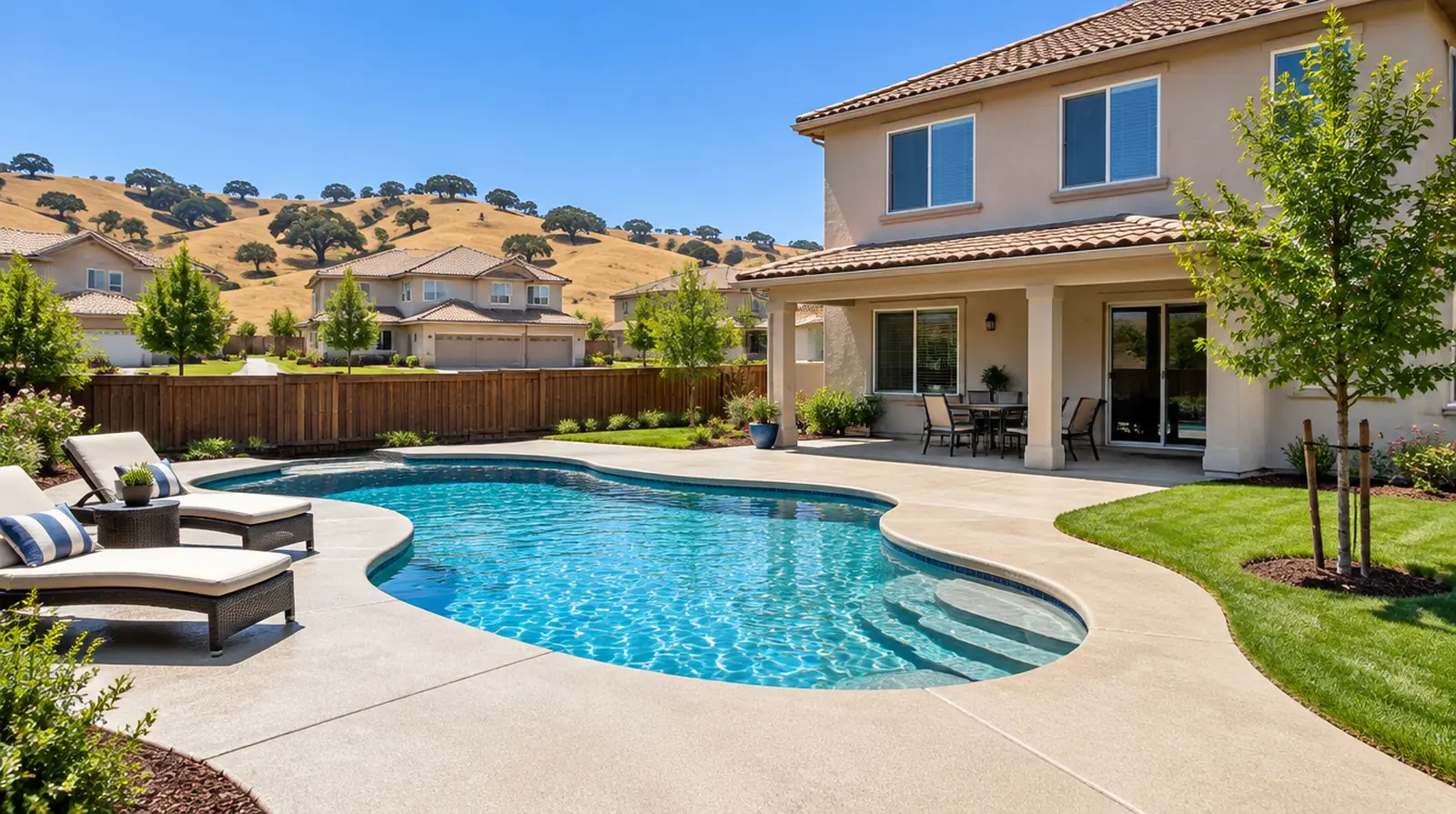
What sun and sprinklers do
Outdoor concrete here spends months under intense sun and then soaks up winter rain. Sprinklers spray the same strip of walkway every morning, leaving white mineral crust and rust streaks. Pool water, sunscreen, barbecue grease and fallen leaves stain unprotected surfaces. Over time the surface erodes, colors fade and small pits form. Sealing slows all of it.
Sealer types
Penetrating repellents
Silane and siloxane products soak into the concrete and repel water without changing its look or texture. They are ideal for driveways, sidewalks and plain patios.
Acrylic sealers
These form a thin film that enhances color, from a natural matte to a wet look. They are popular on stamped and colored concrete but need reapplying every few years in strong sun.
High-performance clear coats
Urethane and polyaspartic sealers resist abrasion and chemicals longer. They suit pool decks and high-use patios.
Cleaning first
A sealer locks in whatever is on the surface, so cleaning is the most important step. We pressure wash with hot water and appropriate cleaners, treat oil and rust, remove efflorescence and let the slab dry fully. Cracks are filled with flexible sealant.
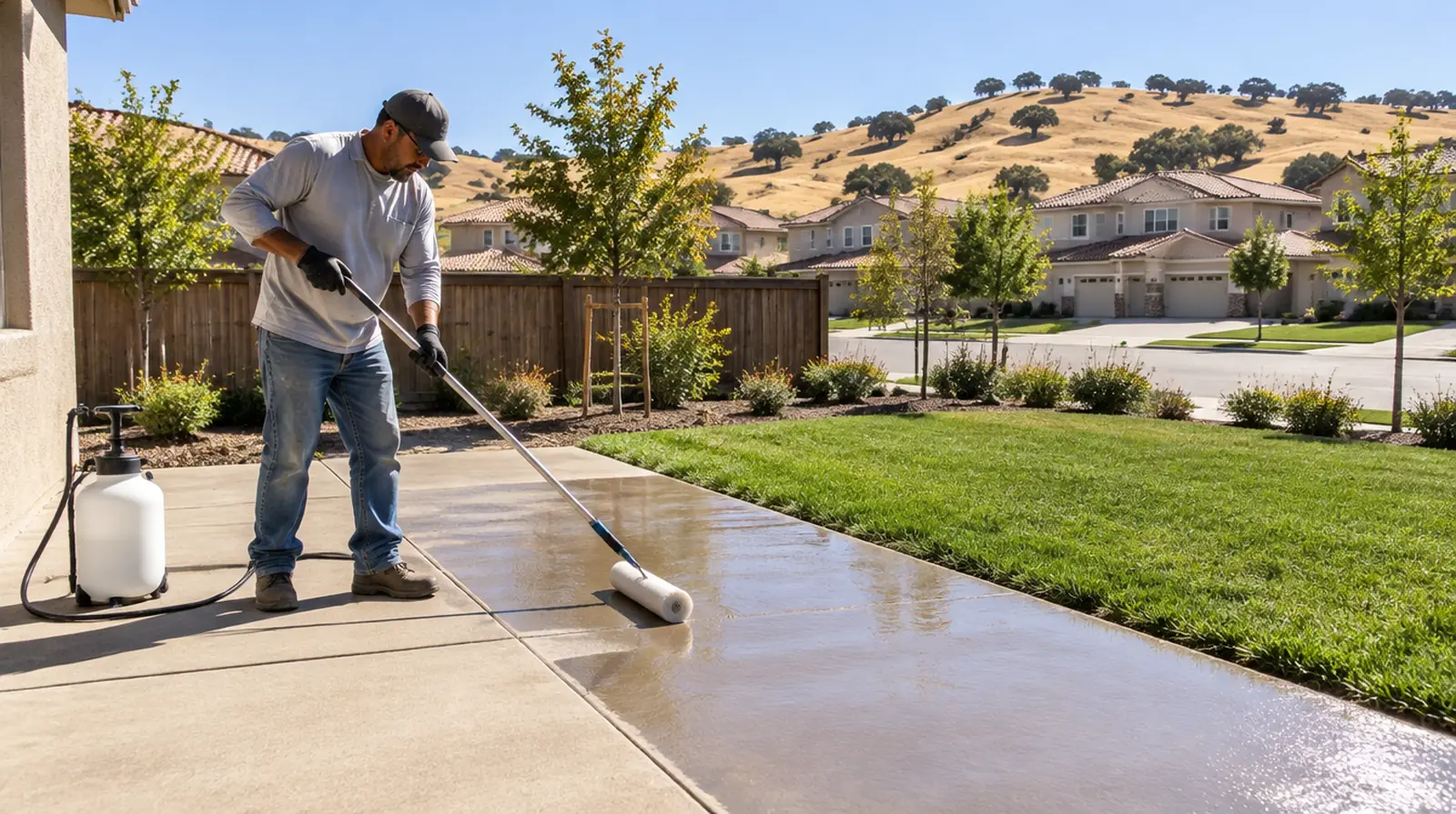
Application
We apply sealer evenly by sprayer and roller, back-rolling to avoid puddles and lap marks. On stamped concrete, a color restoration tint can revive faded patterns before sealing. Anti-slip additives go into film-forming sealers on pool decks and steps.
Timing
We seal in the morning or on mild days, never on a sun-baked afternoon, and keep an eye on the forecast. Sprinklers should be off a day before and after.
Pool decks
Many backyards here have pools. Decks take chlorine, salt, sun and constant wet feet. Sealing reduces staining near the coping, makes cleaning easier and helps protect the surface. We use slip-resistant products and can address hairline cracks before sealing.
Driveways and walkways
Sealing a driveway helps oil wipe up instead of soaking in. If your drive is already badly stained or faded, a tinted driveway coating may serve you better.
Commercial sealing
Storefront walks, outdoor dining areas, loading pads and dumpster enclosures all benefit from sealing. Clean, sealed entries leave a better impression and are quicker to maintain.
Resealing schedule
Penetrating sealers typically last five years or more. Acrylics usually need a fresh coat every two to three years in full sun.
Questions
Will sealing make the deck slippery?
Penetrating sealers do not. We add grit to film-forming sealers.
Can you remove old flaking sealer?
Yes, with chemical strippers or light grinding before resealing.
When can we use it?
Foot traffic within hours, vehicles in a day or two.
Book sealing
Request a free estimate for your patio, pool deck, walkway or driveway.
Signs your concrete needs sealing
Sprinkle a little water on the slab. If it darkens and soaks in within a minute, the surface is porous and unprotected. Other clues include white powdery deposits, colors that look chalky, surface flaking near downspouts and stains that never fully wash out. Catching these early is far cheaper than repairing a spalled walkway later. During our visit we test several spots, because a shaded patio and a sun-baked driveway on the same property often need different products. We will also point out drainage problems, such as downspouts emptying onto the slab, that sealing alone cannot fix, so the protection lasts as long as it should.
We also leave written aftercare notes, including when to restart sprinklers and how to clean without stripping the sealer.
Get a sealing quote
Call (916) 496-3814 for a free estimate.