The DIY story we hear every week
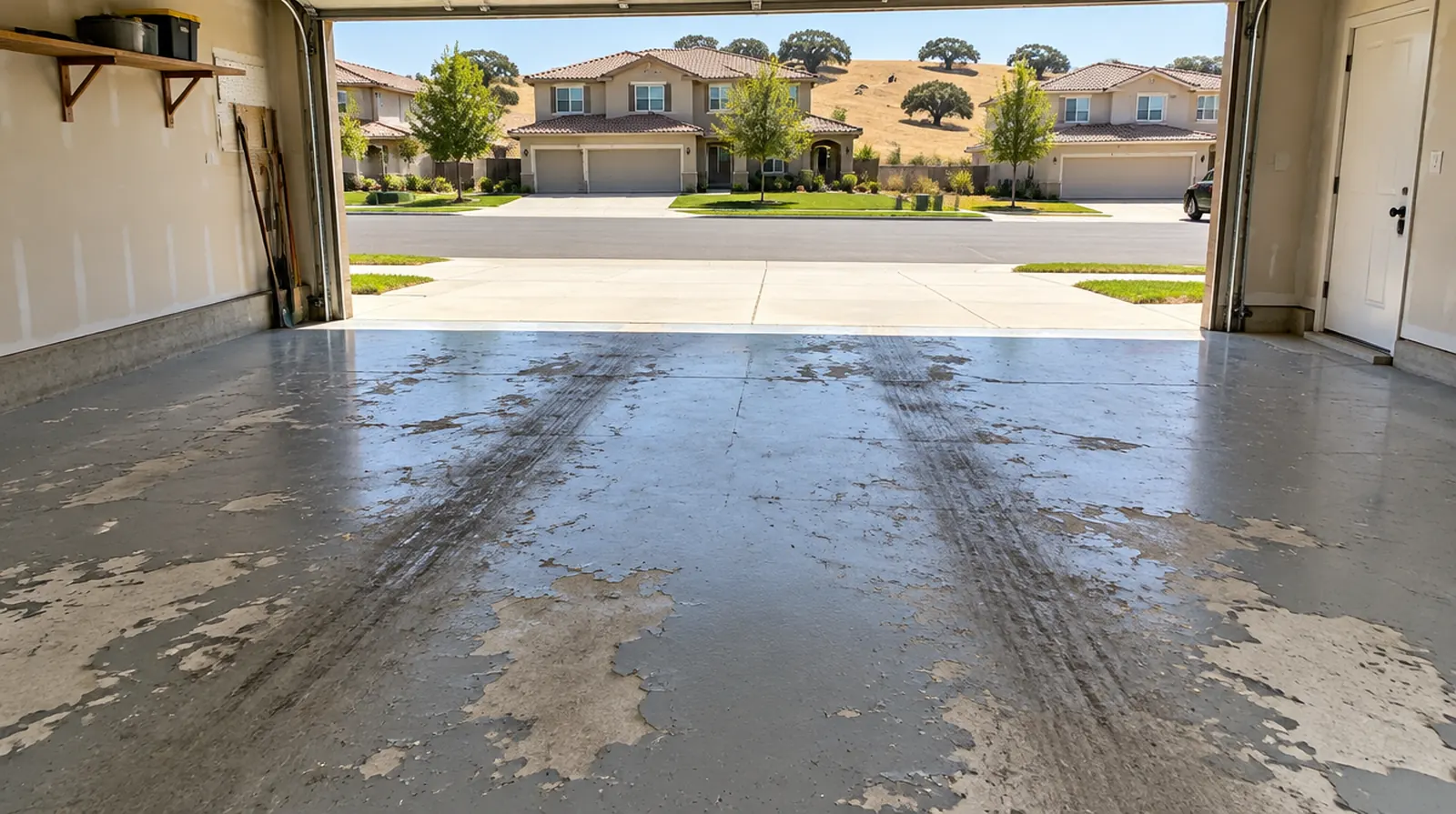
It usually goes like this: a homeowner buys a two-part garage kit, power-washes the floor, maybe uses the included etching solution and rolls on the coating over a weekend. It looks great. Then summer arrives. Within months, the coating starts lifting where the car parks. Patches flake off near the door. Sometimes it peels in long strips. The problem is not effort; it is that the slab was never mechanically prepared and the product was too thin for valley heat.
Other failures we fix
- Hot tire pickup from soft, thin films.
- Blistering caused by moisture vapor rising through the slab.
- Yellowing of epoxy exposed to afternoon sun without a UV-stable topcoat.
- Chips and gouges from dropped tools, trailer jacks or gym equipment.
- Chemical damage from brake fluid, battery acid or harsh cleaners.
- Worn traffic lanes in shops and commercial spaces.
Finding the cause
Before we suggest a fix, we figure out why the floor failed. We test adhesion across the floor, check film thickness, look for moisture and note where the damage concentrates. A floor peeling only in tire lanes tells a different story from one blistering in a corner by the sprinklers. Fixing the cause is what keeps the repair from failing too.
Repair paths
Spot repair
When damage is limited and the rest of the floor is well bonded, we cut back to sound coating, grind the area, patch and recoat. Flake can be blended in to minimize visibility.
Sand and recoat
A bonded but dull, scratched or yellowed floor can be sanded and given a new UV-stable topcoat. This refresh costs far less than replacement.
Full removal
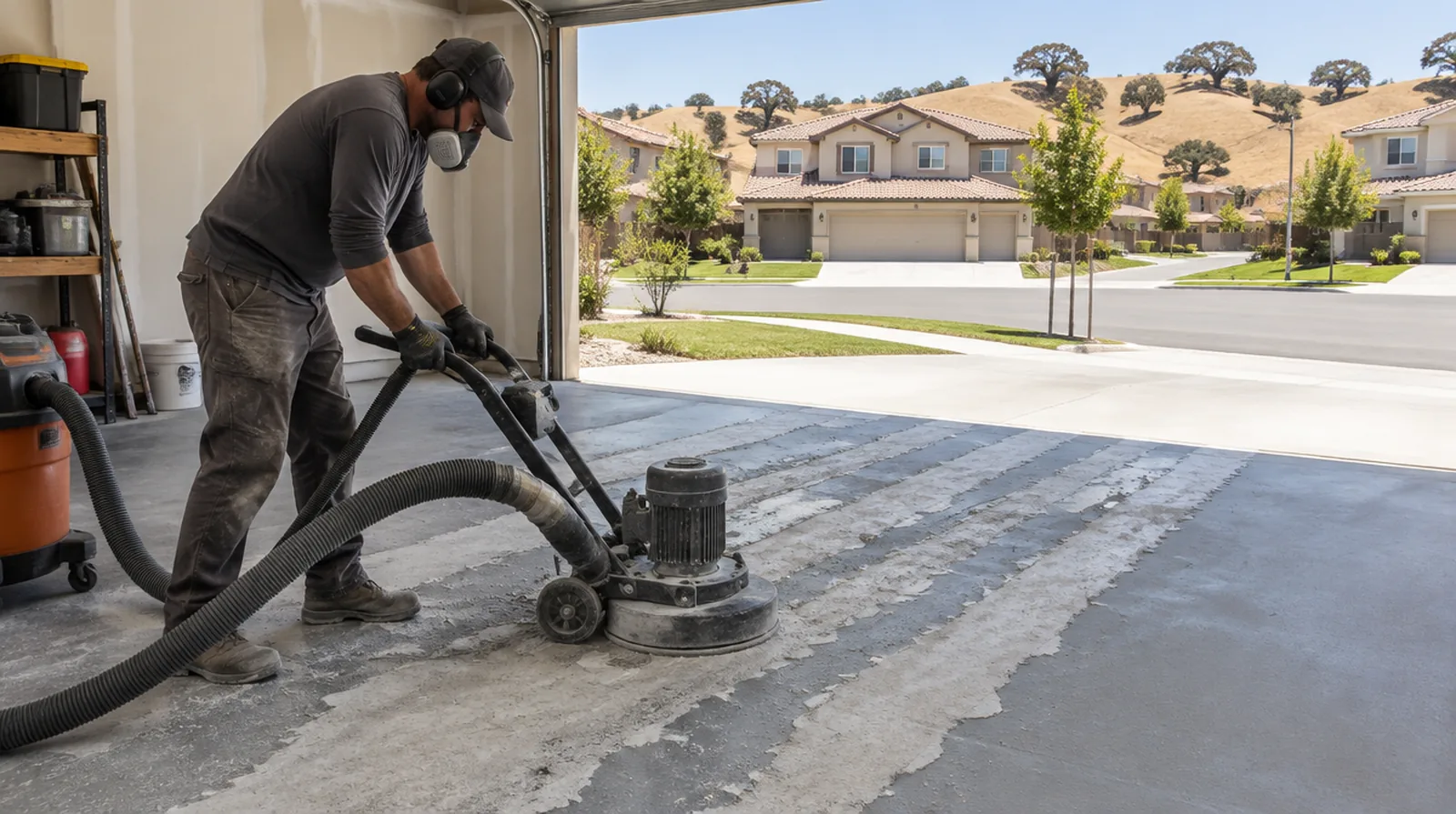
When adhesion is poor across the floor, the only lasting solution is to grind it all off and start over with proper prep and a system designed for heat.
Removing kit coatings
The good news: thin DIY coatings usually come off quickly under a diamond grinder. After removal, we repair cracks and pits and install a professional floor. Many clients tell us they wish they had started there.
Concrete repairs
Failing coatings often hide concrete issues. We fill settlement cracks, rebuild broken joint edges and level small low spots before recoating.
Shop and commercial repair
Worn coatings in shops create trip hazards and cleaning headaches. We repair lanes, joints and damaged areas, often after hours, and can recoat and restripe entire sections.
Preventing the next failure
Every repair or replacement follows our full standards: mechanical grinding, moisture checks, proper film thickness and a topcoat rated for sun and heat. We explain the reasons behind each step so you know why it will last.
Questions
Can you just coat over the peeling floor?
No. A new coating over a failing one will fail with it. Loose material has to come off.
How long does repair take?
Spot repairs and recoats are often one day. Full replacement is one to three days.
Will repairs match?
Close, especially with flake. Faded or yellowed floors may look best with a full recoat.
Send us photos
Contact us with a few pictures or book a visit, and we will explain your options.
Repairing floors in rentals
Landlords and property managers often inherit garages with half-peeled coatings from a previous owner. Between tenants is the ideal time to fix them, since the garage is empty and the work can be finished in a day or two. A clean, solid floor photographs well for listings and reduces wear complaints from future renters.
Get a repair evaluation
Call (916) 496-3814 for a free estimate.